

The Long Simmer - Introduction
Seasonal soups, broths, stews and slow-cooked traditions

The Pot and Fire
Somewhere in the world, at this very moment, a woman is tending a pot. She is drawing a broth from bones, or stirring a stew that has been simmering since morning, or ladling out a soup made from whatever the season, the garden, and the larder have offered up. She is doing what women have always done, in every culture and every corner of the world, feeding her family, her friends, her community, with food that is generous, sustaining, and deeply nourishing.
For most of human history, cooking has taken two quite different forms. Around the open fire, the roasting spit, and eventually the restaurant kitchen, cooking became something performed and celebrated, a display of skill and heat associated largely with men. At the hearth, in the domestic kitchen, cooking is a quieter, daily, water-based task largely carried out by women. Less visible, perhaps, but no less essential. The author Michael Pollan explored this division in his 2013 book Cooked, tracing how pot cooking, the slow braise, the simmered stock, and the soup made from yesterday’s bones have sustained human life across every culture and century while remaining largely unacknowledged.
Slow-cooked, water-based food is also among the most nourishing things a person can eat. Long simmering draws minerals, collagen, and nutrients from bones and vegetables that no other method can reach. It makes the most of humble, inexpensive ingredients. It stretches a small amount of protein across a generous amount of nourishment. A pot of soup feeds many people, costs little, and wastes nothing.
The Long Simmer
This series is a celebration of slow-cooked, domestic cooking and the everyday cooks who have stood at the hearth, feeding the world, throughout history and across every culture. Each month, I will cook a slow-cooked dish from somewhere in the world, photograph it in my kitchen, and share the recipe alongside the history, stories, and cultural traditions behind it. I would love for you to join me. Whether you cook along or simply follow the journey, we will move together through soups, broths, stews, and slow-cooked dishes from the everyday kitchens of different cultures, following the Southern Hemisphere calendar from the depths of winter to the warmth of summer.
In this first year, the journey is also a personal one. I grew up overseas, living in Indonesia, Romania, Ecuador, Gabon, and the Philippines, and my ancestry reaches into the British Isles, France, French Canada, Scandinavia, and Slovenia. Many of the dishes in this first annual cycle connect directly to those places and that heritage, carrying memories of countries I called home and cultures that shaped me. In subsequent years, the series will range more widely, into traditions I come to as a curious outsider, but this first year belongs, in large part, to the kitchens of my own history.
The Long Simmer grows out of Wheel & Cross’s three existing publications, the Southlands Almanac, the Monthly Seasonal Celebrations Digest, and the Full Moon Series. Each of these publications invites you to notice, to learn, and to celebrate the turning year. This series is the most personal of the four, weaving stories from my own life into each dish, and the most experiential, bringing you into the kitchen alongside me.
The Long Simmer publishes on the second week of each month, from June to May. This first annual cycle, June 2026 to May 2027, includes the following dishes:
June: Pea and Ham Soup, England
July: Raštika, Croatia (Dalmatia)
August: Bulalo, Philippines
September: Ash Reshteh, Persia/Iran
October: Shorbat Adas, Egypt/Lebanon
November: Soto Ayam, Indonesia
December: Gazpacho, Spain
January: Sopa de Lima, Mexico
February: Poulet Nyembwe, Gabon
March: Minestrone, Italy
April: Locro, Argentina/Andes
May: Borscht, Ukraine
Every dish in this series will be researched and credited specifically, drawing on academic sources, documented culinary histories, and cultural organisations where possible.
I can't wait to cook these dishes, dig into their history and traditions, and share them with you. I hope you'll enjoy the journey and maybe even cook alongside me.
Note About the Logo
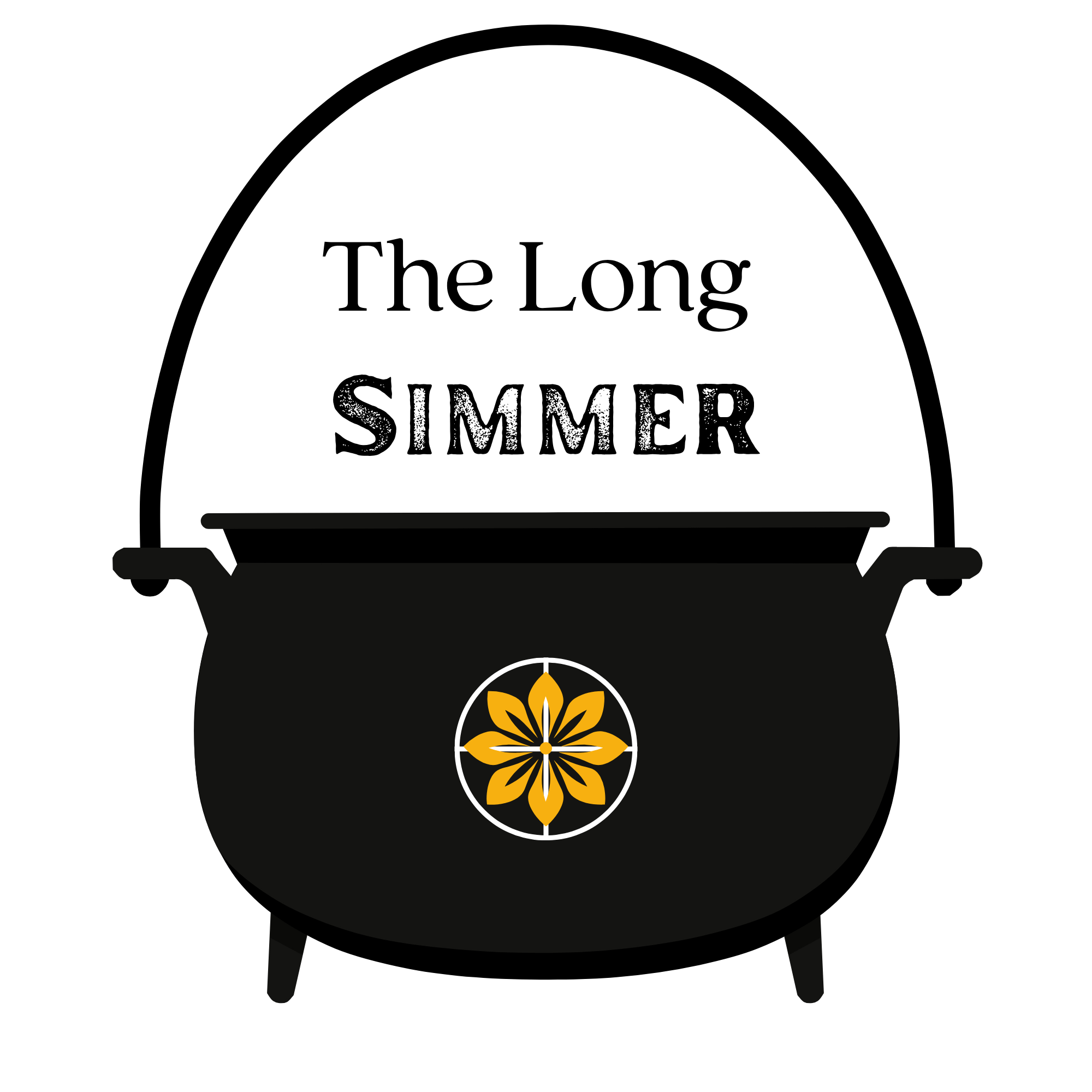
The Long Simmer logo features a traditional three-legged cast iron pot, a vessel that has sat above fires and hearths across the world for thousands of years. On its body, it carries the Wheel and Cross emblem: The Sun Wheel and the Fern Flower.
The Sun Wheel is one of the oldest symbols in human history, representing the four directions, the four elements, the turning of the seasons, and the modern scientific symbol for Earth. The Fern Flower comes from Slavic mythology, a legendary bloom said to appear for a brief, magical moment at midsummer, gifting wisdom, renewal, and a deeper understanding of the world to those who find it.
You can read the full story behind the logo here, and an article reclaiming the Sun Wheel as a symbol of life, not hate, here. You can read the full story behind the emblem here, and an article reclaiming the Sun Wheel as a symbol of life, not hate, here.
Soups and stews are amongst my favourite foods! I look forward to following along - and I'm already thinking of heading out for some split peas and a ham hock!